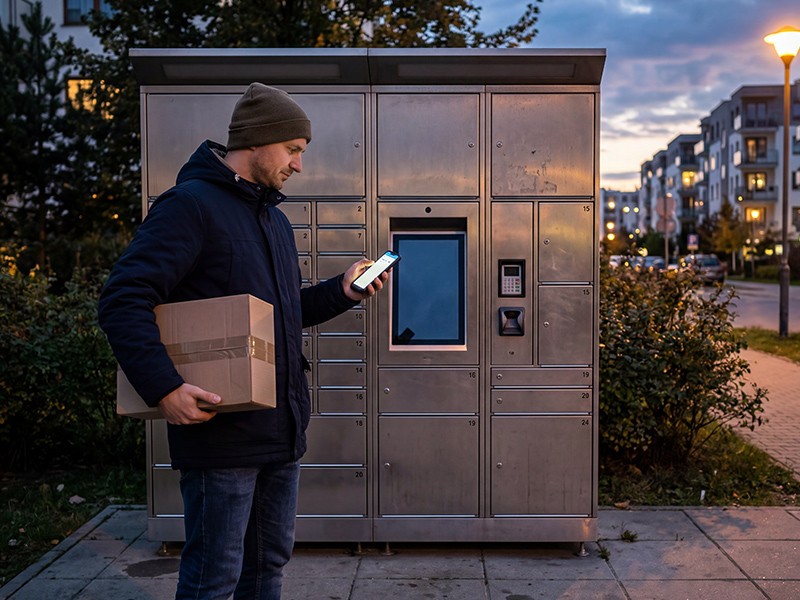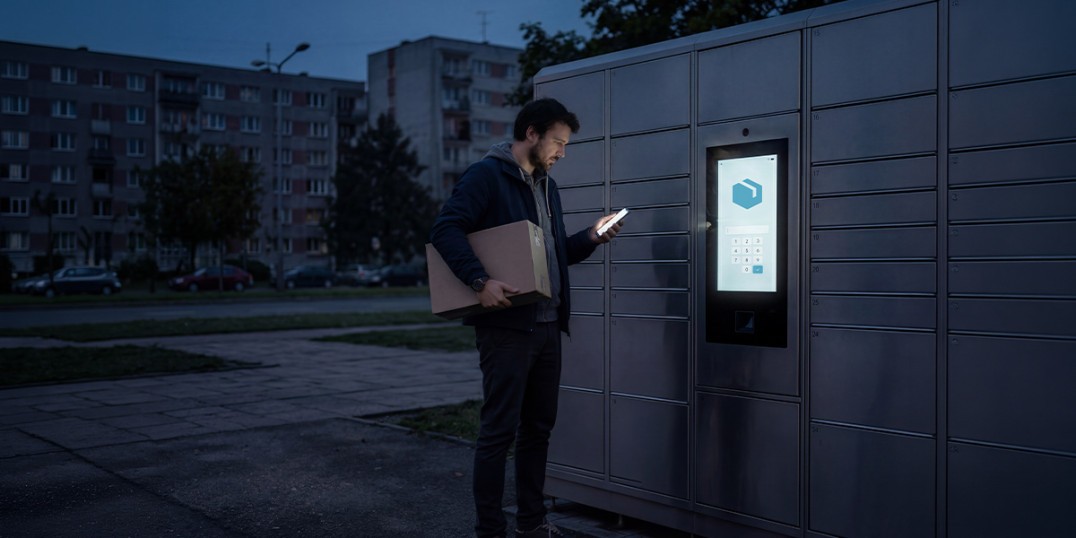
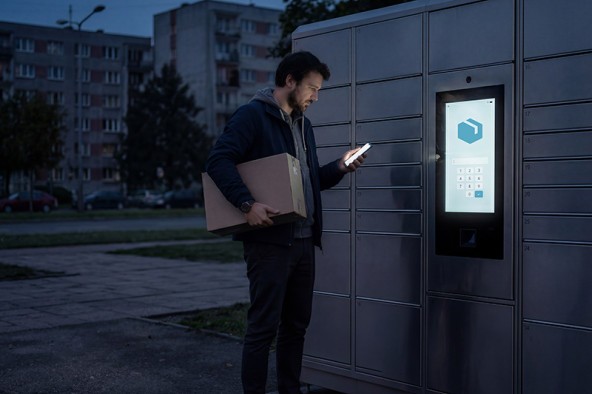
Parcel drop-off and pickup machines, payment kiosks, ticket terminals, and self-service machines operate almost nonstop these days.. Users expect the locker to open immediately, the payment to be processed correctly, and the system to maintain a connection with the central server. In practice, however, even a brief power outage can cause a transaction error, data loss, or the need for service intervention.
This is precisely why a UPS (Uninterruptible Power Supply) is such a critical component of the infrastructure. A properly selected UPS maintains device operation during a power outage, protects equipment from disruptions, and provides time to shut down the system.
UPS as a component of the infrastructure for parcel lockers and similar devices
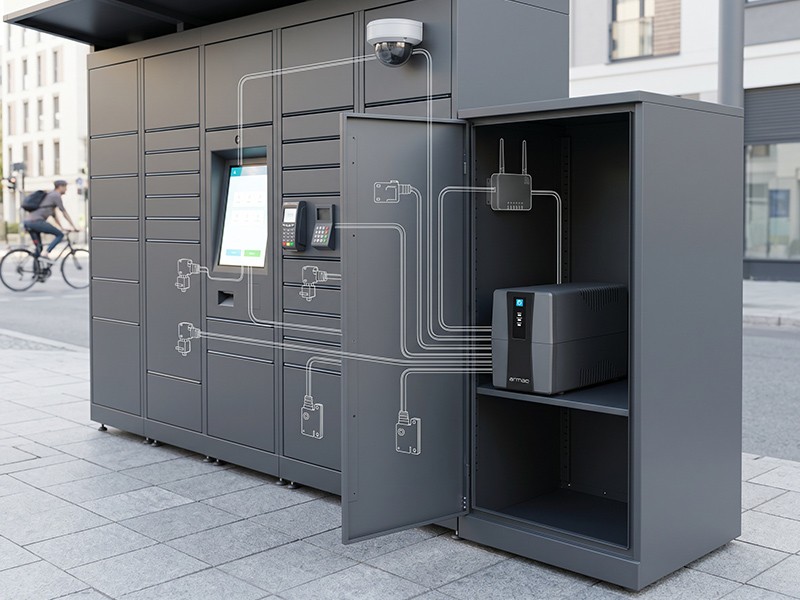
A package locker is more than just metal compartments - inside, it houses electronic devices, communication modules, lock controllers, a screen, a payment terminal, a router, a monitoring system, and systems responsible for identifying packages. These devices often require a stable voltage, so a sudden power outage can have serious consequences.
In such an environment, an uninterruptible power supply (UPS) performs several functions simultaneously. First, it ensures continuous operation during a brief power outage. Second, it stabilizes the voltage and protects the equipment from voltage fluctuations and surges. Third, it enables a controlled shutdown of the systems if the outage persists.
For self-service kiosks, uninterrupted operation is critical, as any downtime affects the end user, logistics, and the operator’s reputation. A UPS helps mitigate the risk that a temporary power outage will bring an entire package pickup location to a standstill.
Why is a UPS important for business continuity?
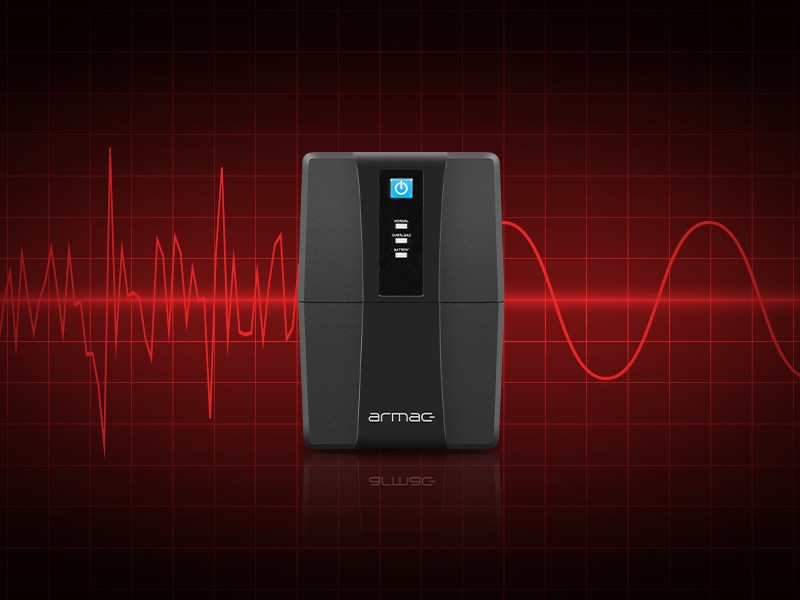
In many locations, the power grid is not perfectly stable. Short-term outages, voltage drops, overvoltages, voltage spikes, or a complete loss of power may occur. Without proper protection, such events can lead to system crashes, communication errors, and even equipment damage.
An uninterruptible power supply (UPS) ensures continuous operation by automatically switching to battery power when it detects a problem with the grid. The user usually doesn’t even notice that a power outage has occurred. This is particularly important when the system interfaces with a central database, a mobile app, or a payment terminal. Such a sudden power outage can lead to data loss or inconsistencies in information—for example, when a locker has been opened but the system did not have time to record it.
A UPS Should Not Be Treated as an Afterthought
When designing parcel lockers and similar self-service stations, a UPS should not be treated as an optional accessory. It is a critical component of infrastructure protection that ensures power stability and maintains system availability.
A UPS protects equipment not only from sudden power outages but also from disturbances that may be less noticeable to the user. Voltage fluctuations, surges, or unstable power quality can shorten the lifespan of electronics, batteries, communication modules, and control components. A well-chosen power supply can therefore reduce maintenance costs and minimize the risk of serious failures.
In practice, a UPS effectively protects not only the parcel locker itself, but also LTE routers, IoT modules, access control systems, and components responsible for communication with the central office.
How does the emergency power supply work in package lockers?
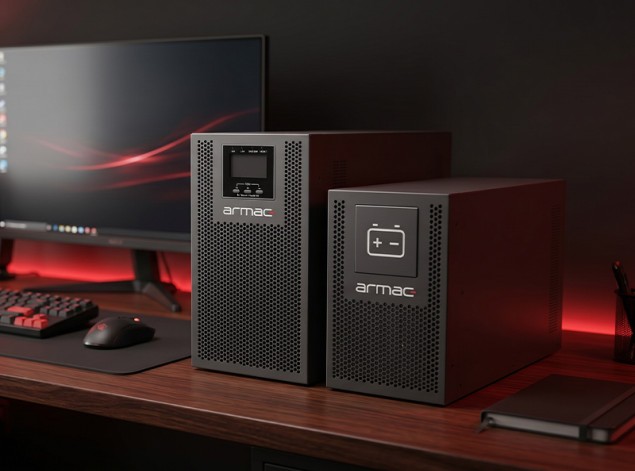
Uninterruptible power supply (UPS) systems operate on a simple principle: when mains power is available, the UPS supplies power to the devices and charges the battery. When a failure, power outage, or voltage drop occurs, the UPS switches to battery power and maintains power to the connected devices.
Depending on the device’s design, this process can occur with minimal interruption or virtually no noticeable switchover. In a package pickup machine, this is crucial because the device must maintain continuous operation even during temporary power grid issues.
The most important parameter is the runtime. It does not always have to be several hours—sometimes just a few or a dozen or so minutes is enough to weather short-term power outages. In other cases, especially in locations with an unstable power supply, a longer runtime may be necessary.
Types of UPS systems: offline, line-interactive, and online
Choosing the right solution depends on the nature of the device, the quality of the local power grid, and the required level of fault tolerance. The most common types of uninterruptible power supplies (UPS) are offline, line-interactive, and online.
An offline UPS is the simplest solution; when the grid is functioning normally, it supplies power directly to connected devices and switches to battery power only after detecting a power outage. It may be suitable for less demanding loads, but for self-service devices, a line-interactive or online UPS is usually a better choice.
For many field applications, a line-interactive UPS is a good choice, as it stabilizes the voltage and handles typical voltage fluctuations well. This solution is often chosen where a reasonable balance between price, performance, and runtime is needed.
In more demanding environments, an online UPS may be worth considering. Such a UPS provides the highest quality of power, as the energy passes through an inverter, and devices receive a stable voltage regardless of grid disturbances. Online solutions are particularly important for server rooms, data centers, payment systems, and infrastructure where an outage could result in significant losses.
UPS Monitoring and Remote Control
In the case of a distributed network of parcel lockers, the UPS alone is not enough. Monitoring its status is equally important. The operator should know whether the battery is functioning properly, what the load level is, whether a power failure has occurred, and how much backup time remains.
Monitoring allows for a faster response to problems and enables service planning before the device becomes inoperable. In large installations, this is a critical feature, as manually checking each location would be time-consuming and costly.
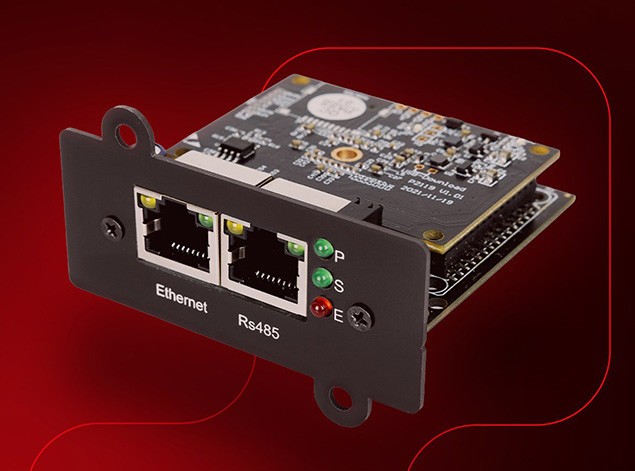
It’s worth paying attention to additional features such as SNMP communication, email notifications, integration with an infrastructure management system, an event log, and the ability to perform a remote restart. Such features increase control over device operation and help maintain business continuity.
Server rooms, data centers, and package lockers
Although a parcel locker is typically located outside the server room, its operation is linked to central systems. Servers handle shipment data, pickup statuses, communication with the mobile app, payments, user authorization, and reporting. If a failure affects the server room or data centers, the consequences can be felt throughout the entire network.
Therefore, UPS systems should protect both individual pickup points and the central IT infrastructure. In the server room, a UPS provides time to safely shut down servers or switch the load to a backup power source. It also protects against data loss that could occur during a sudden power outage.
In this context, emergency power supply is part of a broader security strategy. It includes UPS systems, generators, network redundancy, data backup, and maintenance procedures.

How to Choose a UPS for a Package Vending Machine?
To choose the right UPS, you must first determine which devices will be connected to it. You should take into account the main controller, the display, the payment terminal, the router, the locking system, communication modules, and any heating or ventilation for the electronics.
Next, calculate the total power consumption of the devices and select a UPS with an appropriate power reserve. A UPS that is too weak may not be able to keep the system running, while one that is too powerful will be unnecessarily expensive. The battery is also important, as it determines how long the device will operate during a power outage.
When making your selection, consider the following:
- power capacity and margin relative to the actual load,
- required backup time,
- ability to operate in varying environmental conditions,
- ease of battery replacement,
- protection against power surges and voltage fluctuations,
- compatibility with the requirements of electronic devices.
The selection of an appropriate UPS should be based on a risk analysis. The approach to selecting a UPS for a single information kiosk differs from that for a package locker in a high-traffic location, and differs yet again from that for data centers.
Home UPS vs. Self-Service Kiosk UPS
The term “home UPS” is often associated with protecting a computer, router, or other computer equipment from data loss. In such applications, the main priority is the ability to save work and maintain an internet connection.
In the case of package lockers, the requirements are usually higher. They operate in public spaces, often around the clock, and their failure can cause problems for many users. Therefore, an uninterruptible power supply (UPS) for such infrastructure should be treated as a professional solution, not a household accessory.
A home UPS can protect a single computer or router, but package vending machines and similar systems require better monitoring, greater resilience, and precise adaptation to operating conditions.
What could happen without an uninterruptible power supply (UPS)?
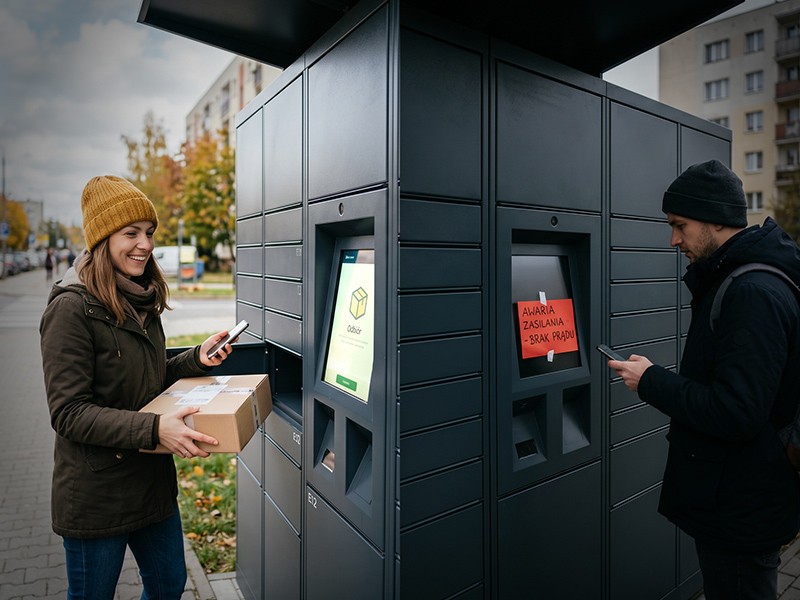
Not having a UPS increases the risk of many problems. A sudden power outage can interrupt the package receipt process, corrupt transaction data, or prevent the system from shutting down properly. In extreme cases, it can result in equipment damage or require manual intervention by a technician.
A power outage can also affect CCTV systems. If cameras, a recorder, or a communication module stop working, the operator loses visibility of the situation at a given location. This is particularly important in public areas, where security and incident monitoring are critical.
A well-designed emergency power supply system minimizes this risk and ensures operational continuity even when the power grid fails.
A UPS as the foundation for the safe operation of a parcel machine
A UPS is much more than just a battery connected to a device. It is a vital component of the infrastructure that ensures uninterrupted power supply, operational stability, and protection against sudden power outages. In parcel lockers, self-service kiosks, terminals, and logistics systems, its role is particularly critical, as any failure can impact users, data, and operating costs.
A well-chosen UPS protects equipment, prevents data loss, and provides time to safely shut down systems. Combined with a backup plan and proper service management, it offers effective protection against power outages.
In practice, this means one thing: if a parcel locker or similar device is to operate stably, reliably, and safely, a UPS should be treated as a fundamental component of infrastructure protection, not as an optional add-on.